The Pressures of Development: Monmouth County’s Crossroads

“Habitat Loss.” Photo by Emilee Carton, Jersey Shore Wildlife Photography

In 2022, local wildlife photographer and Monmouth Conservation Foundation (MCF) partner Emilee Carton came across a fox perched along the train tracks in Little Silver. The situation was curious, as a train was rapidly approaching. Emilee snapped this poignant image and crept closer, determined to find out why the fox refused to move. She soon realized the fox had a baby that lay injured in the tracks. It had been clipped by a previous train.

Fortunately for both foxes, Emilee had experience handling injured wildlife, and she acted quickly. She called a wildlife rehabilitation center who had time to prepare for emergency surgery before Emilee arrived, cradling the motionless baby fox. The mother fox, who had refused to leave her baby’s side until it was rescued, slipped into the brush and disappeared. In time, the fox kit grew up healthy and was eventually re-released into the wild.
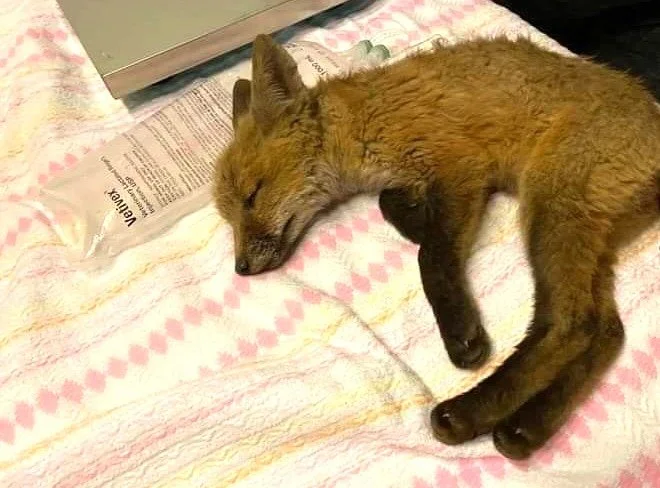
The rescued fox kit, who was eventually released into the wild. Photo by Emilee Carton, Jersey Shore Wildlife Photography

This experience inspired Emilee’s journey to becoming a licensed New Jersey animal control officer and, later, to volunteer for MCF. She has since witnessed similar moments where nature and society collide. While this chapter of the story ended happily for the little fox, the encounter speaks to a wider issue.

Development pressures in Monmouth County are real and accelerating. The “train” is coming, but there is still time to make thoughtful choices that define the future of our region. If development goes unchecked, both people and wildlife will face the consequences of reduced green space. This includes greater flooding risk, pollution, strained utility infrastructure, noise burdens, and traffic congestion, and the gradual erosion of quality of life.

“Once farmland and natural corridors are gone, that loss is permanent,” Jena Cosimo, MCF’s Director of Acquisitions, shares. “While development is an essential fact of progress, the consequences of getting it wrong are serious. Smart land-use planning and environmental review prevent costly mistakes and determine long-lasting community benefits that maintain the value of our land forever.”
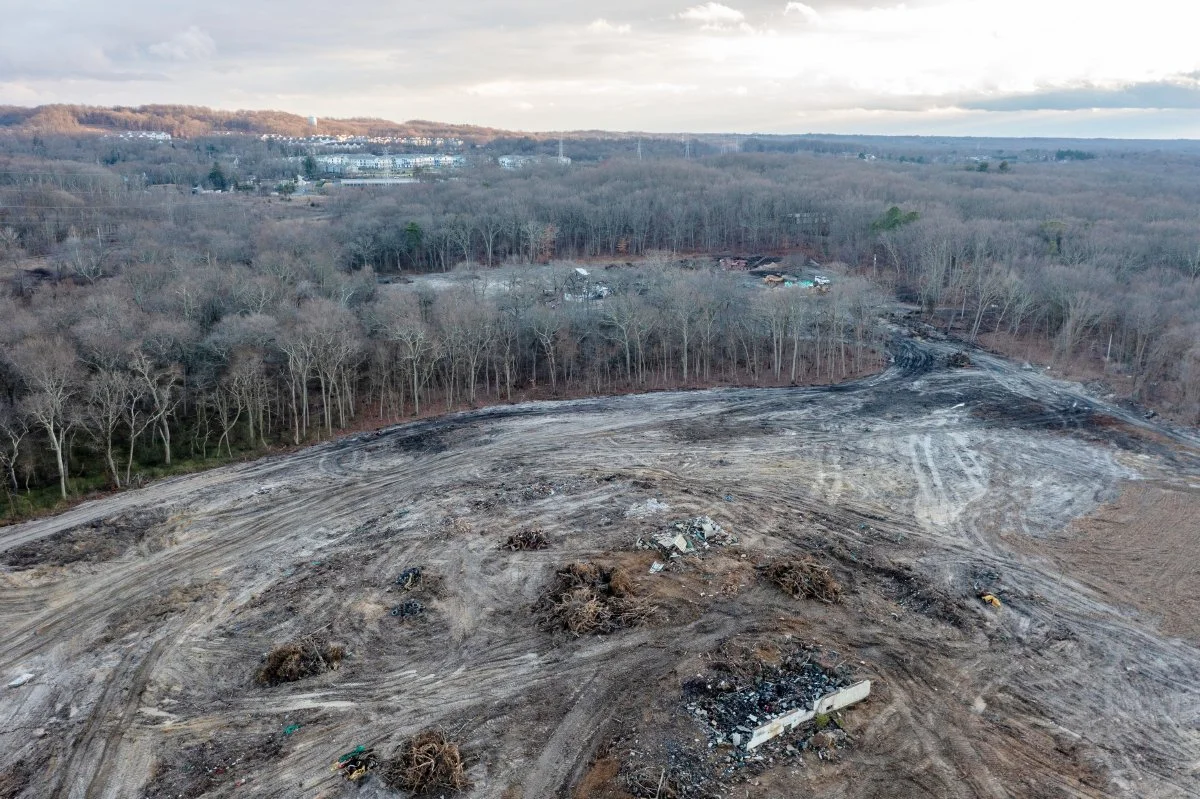
Habitat fragmentation impacts all life in Monmouth County. Photo by Fred Yahn, Eagle Drone Solutions.

As a nonprofit land trust, Monmouth Conservation Foundation works with private landowners and government and community partners to facilitate land preservation. We do not oppose development but champion thoughtful, strategic community planning that makes room for the future without sacrificing the green spaces and natural habitats that define Monmouth County’s character. Our work to permanently preserve land is made possible by the support of generous donors and a dedicated community of citizens who are just as passionate as we are.

MCF carefully considers the conservation values of areas not yet preserved or developed. We prioritize land opportunities by their ecological characteristics, like whether it contains sensitive natural resources, or will create wildlife corridors that connect to other green spaces. We take this strategic approach because land conservation and community vitality are deeply intertwined.

Open spaces enhance quality of life for all living things, providing countless shared benefits. Ultimately, more green space improves the air we breathe, the water we drink, and supports the long-term sustainability of our communities. Monmouth County’s rich farmland, coastal communities, beaches, and forestland form a rare blend in New Jersey, giving residents access to nature within minutes. The unique connection people form to natural surroundings is called our “sense of place,” and Monmouth County’s special environment attracts families, businesses, and visitors, which strengthens both our community identity and local economy.

Ironically, this desirability comes with significant pressure to develop. Monmouth County’s environmental appeal generates an ever-present demand for high-density housing and commercial outfits. It’s no surprise, therefore, that New Jersey is the most densely populated state in the nation. For agricultural enterprises falling on hard times, selling land can feel like a lifeline. But when warehouses or oversized developments dominate the landscape, the negative impacts extend beyond conflicts with wildlife. 
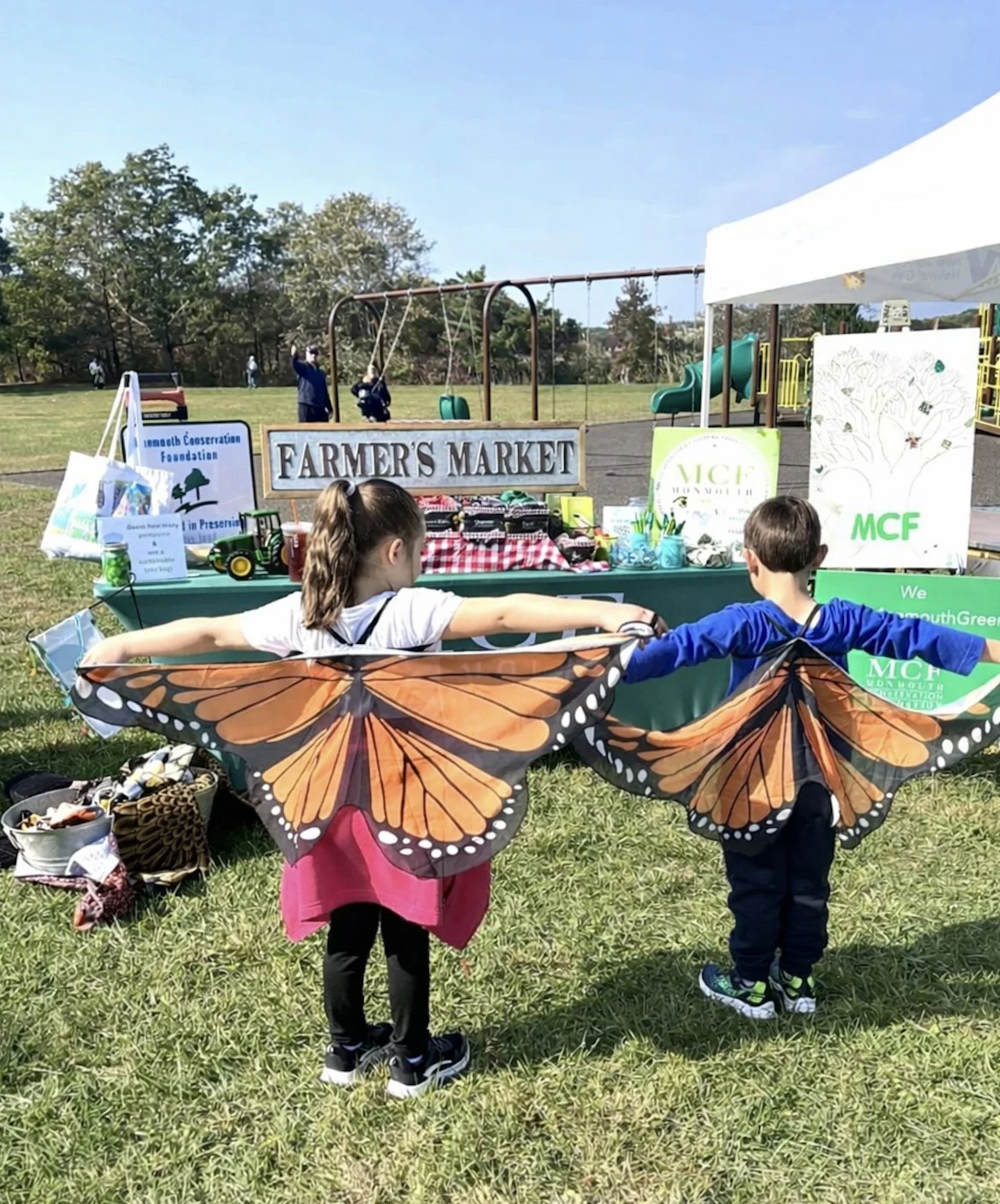
Both human and natural communities thrive with access to green spaces. Photo by Karen Keene.
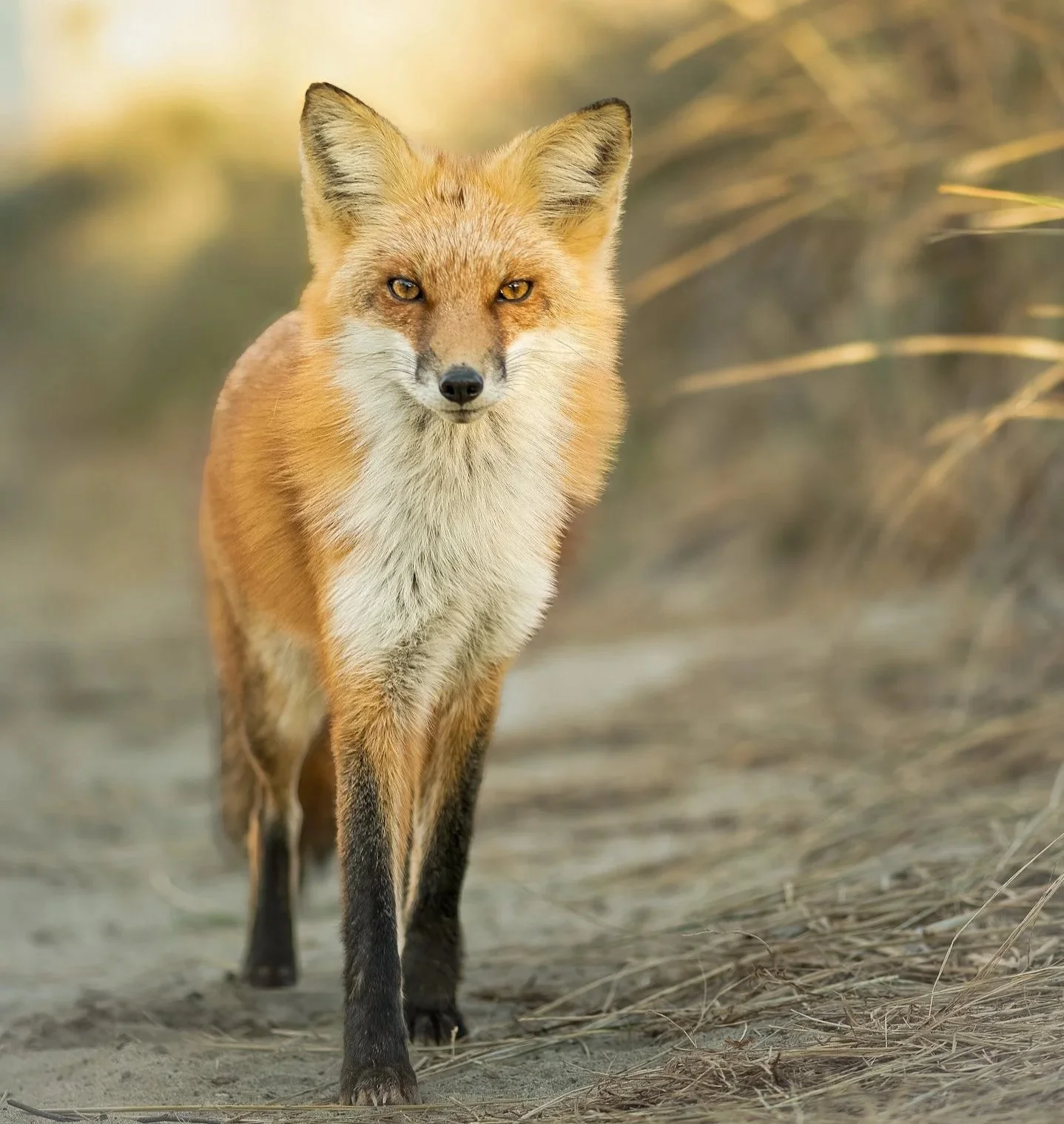
 Photo by Emilee Carton, Jersey Shore Wildlife Photography

Getting this balance right requires engaged planning boards, informed citizens, and science-based land-use decisions that anticipate the future instead of reacting to it. Monmouth Conservation Foundation plays a vital role in protecting critical open space, including and working alongside local partners, municipalities, and county, state, and federal agencies to build resilient, vibrant communities across Monmouth County. 

Each of us has a part to play in local planning decisions, supporting conservation efforts, and advocating for development that considers the land we share with wildlife. The “train” may be coming, but together, we can choose a future that works for all life.  

We can’t do this work alone. You can help #KeepMonmouthGreen by supporting our mission to create parks, preserve farms, and protecting open space. If you have questions about land preservation and wish to explore our services, please contact us

The fox kit in Emilee’s story was rescued and released, but what happens to him next depends on the choices we make as voters and citizens. Monmouth County is at a crossroads, and while the development pressures are real, they are not insurmountable if we choose wisely.  

By preserving land through outright purchase and conservation easements, MCF helps ensure a lasting legacy of open space that benefits all living things. Our organization actively stewards these lands through habitat restoration and the implementation of natural climate solutions that protect vital natural resources and strengthen ecosystem health. A powerful example of this work is underway at Scudder Preserve in Middletown, New Jersey, where families of foxes and other wildlife can thrive free from the train tracks, roads, and warehouses that fragment so many other habitats. 

By prioritizing the revitalization of already underused properties, like shuttered shopping centers, vacant commercial lots, and aging industrial parcels, municipalities can meet modern needs without sacrificing the irreplaceable farmland, forests, and wildlife corridors that define us. 
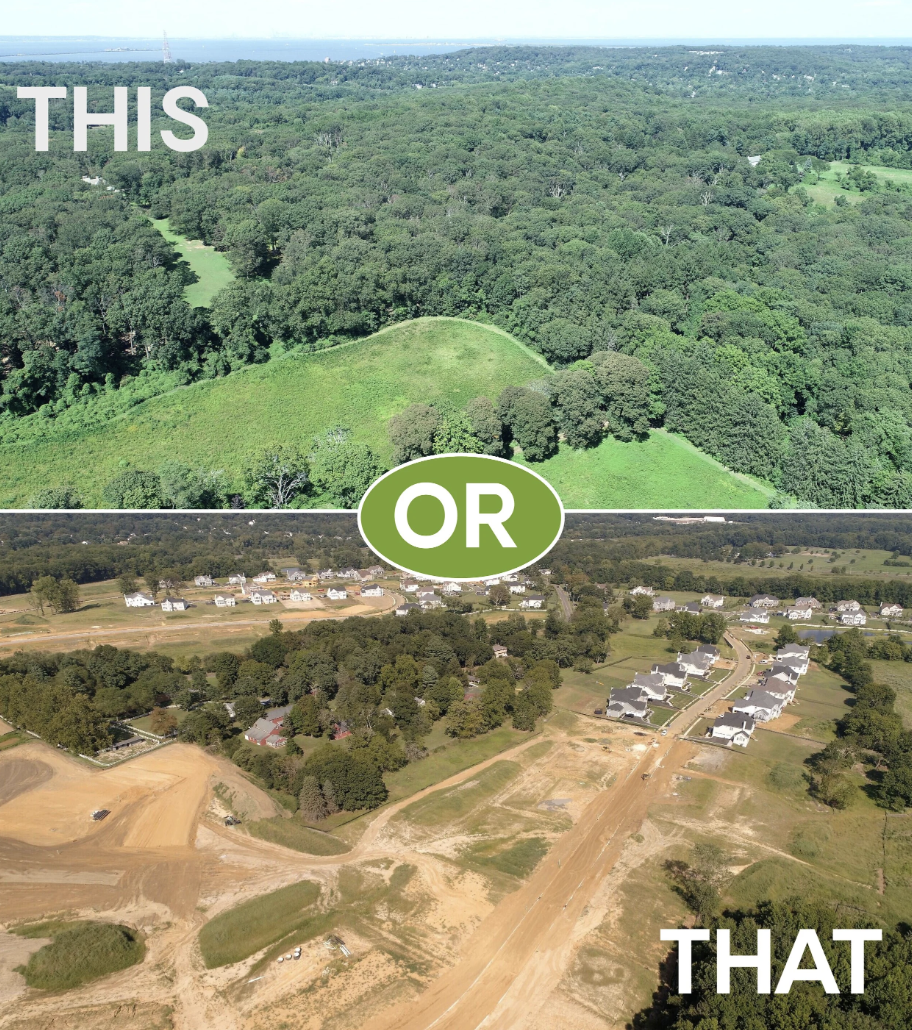
MCF works hard to protect the open spaces, parks, and farmland that make Monmouth County special. Photos by Fred Yahn, Eagle Drone Solutions.

Monmouth Conservation Foundation Earns a Four-Star Rating From Charity Navigator


Graphic awarded by Charity Navigator.


Monmouth Conservation Foundation (MCF) is proud to announce that its strong financial health and ongoing effectiveness and reliability have helped it earn a Four-Star Rating from Charity Navigator. This rating designates MCF as an official “Give with Confidence” charity, indicating that our organization is using its donations effectively based on Charity Navigator’s comprehensive criteria that go beyond financials to reflect the work charities do. Charity Navigator is the nation’s largest charity evaluator, providing donors with thorough and credible ratings of more than 230,000 organizations. Since 2001, the organization has been an unbiased and trusted source of information for more than 11 million donors annually. 

Charity Navigator analyzes overall nonprofit health and performance based on four key areas: Leadership & Adaptability to help donors understand if a charity has clarity of purpose, Accountability & Finance to explain if they are transparent and fiscally capable, Culture & Community to show how they engage with their constituents, and Impact & Results to explain what they have accomplished. 

Our work is driven by our supporters, and we take great care in managing their generous donations. We are honored to receive this rating and hope it instills confidence in our work for current and new donors,” said Karen Keene, MCF Acting Co-Executive Director and Director of Development & Communications. 

This recognition underscores Monmouth Conservation Foundation’s ongoing commitment to excellence in both financial stewardship and delivering lasting conservation outcomes for Monmouth County. As MCF looks to the future, the organization remains focused on preserving open space and farmland, creating parks that bring people closer to nature, and expanding opportunities for environmental education that inspire stewardship across generations. Support from the community makes this work possible. Every donation, partnership, and shared commitment strengthens MCF’s ability to protect the lands and resources that define our region. Together, we are ensuring that Monmouth County’s natural landscapes remain vibrant, productive, and accessible for years to come.

Click here for giving opportunities at MCF or contact Karen Keene (name linked to my email), Director of Development and Communications at 908-839-0324.

Winter on the Farm: A Season of Care and Preparation

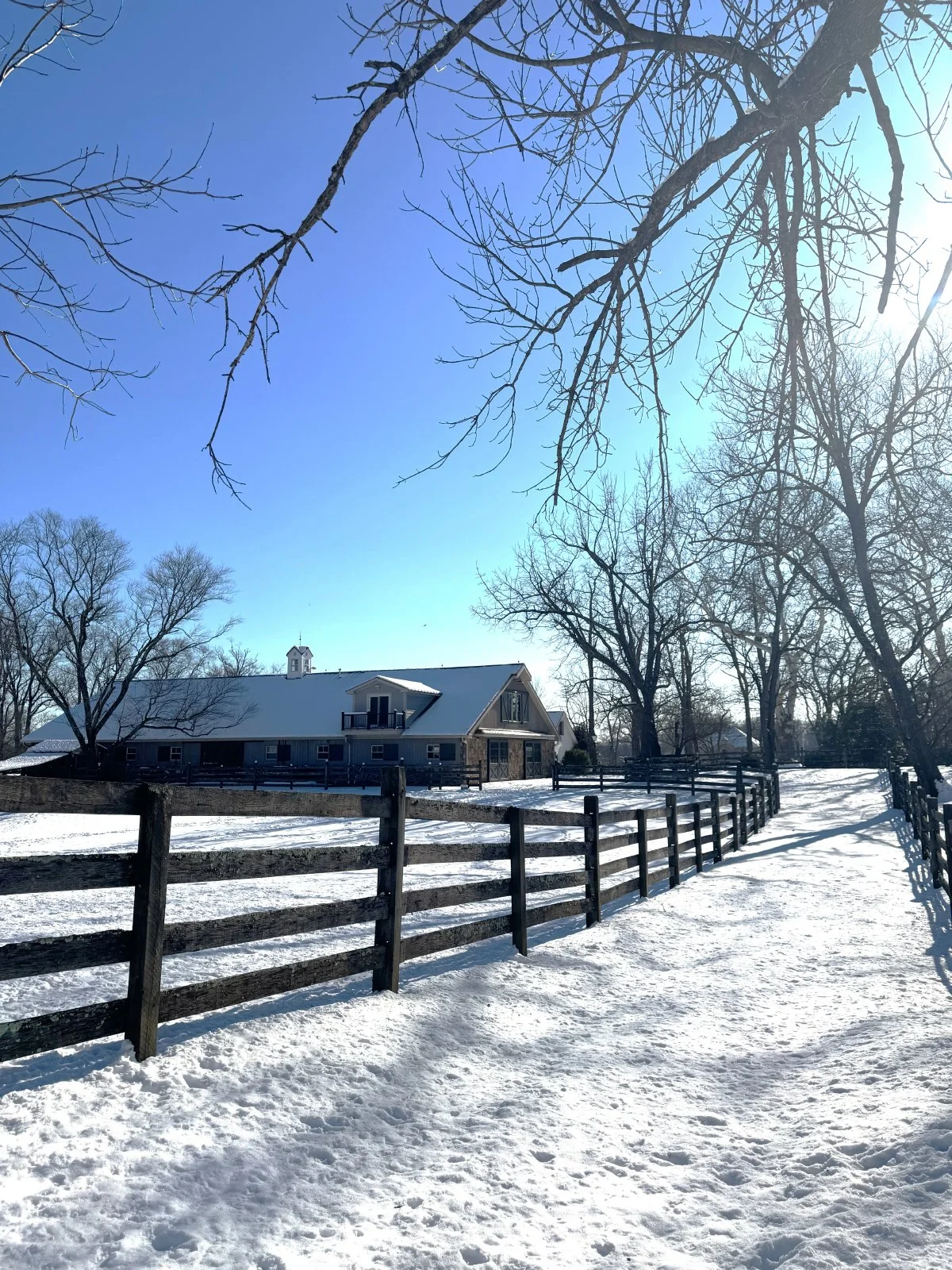
Photo by Jena Cosimo.

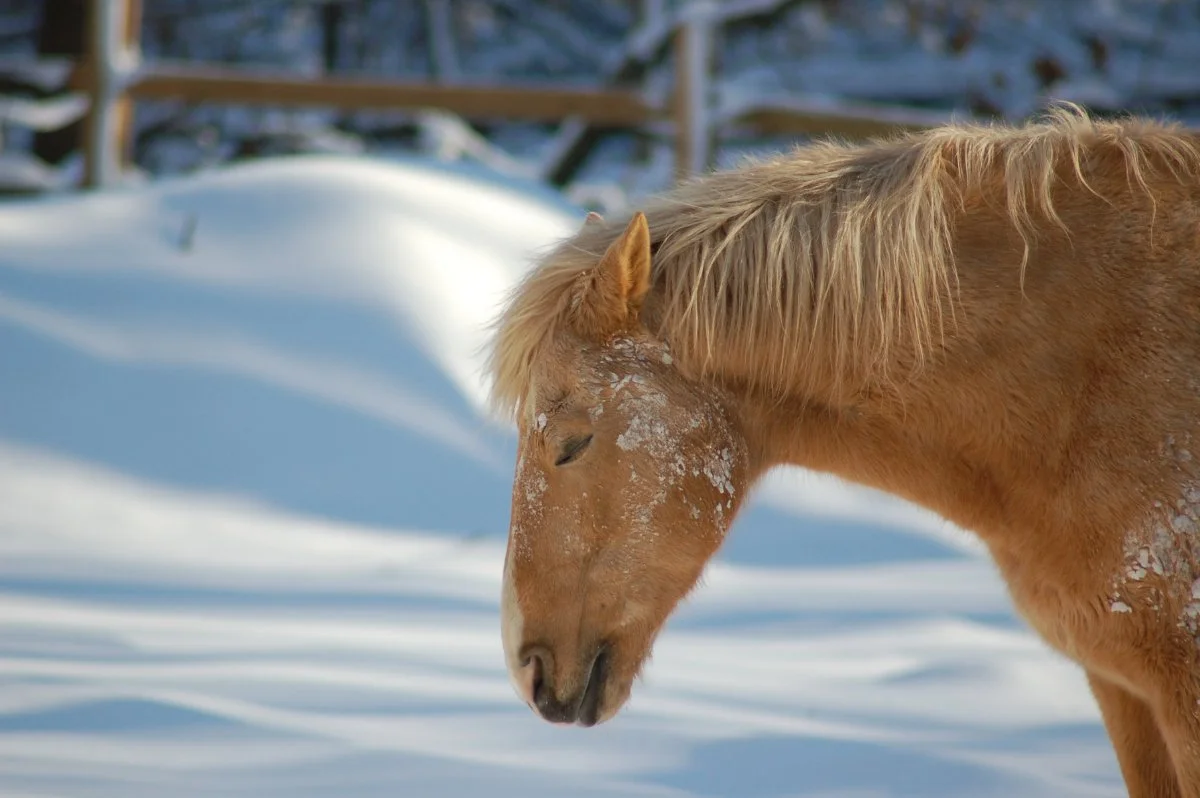
Winter is when Monmouth County’s farmers lay the groundwork for a successful year ahead. While fields may look empty, agriculture remains active throughout the winter months as farmers shift their focus from harvest to preparation. According to the Samaha Farm family, this season is essential for maintaining equipment, reviewing budgets, buying seeds, and for some operations, planning crop rotations that sustain healthy future yields. Some farms continue growing cold-hardy crops like kale, spinach, and broccoli, or remain active in winter farmers’ markets by selling stored produce, honey, and handmade goods. Winter is also a time for planning; an opportunity, when possible, to evaluate and prepare for the busy seasons ahead. 

Photo by Ray Shrewsberry on Unsplash .

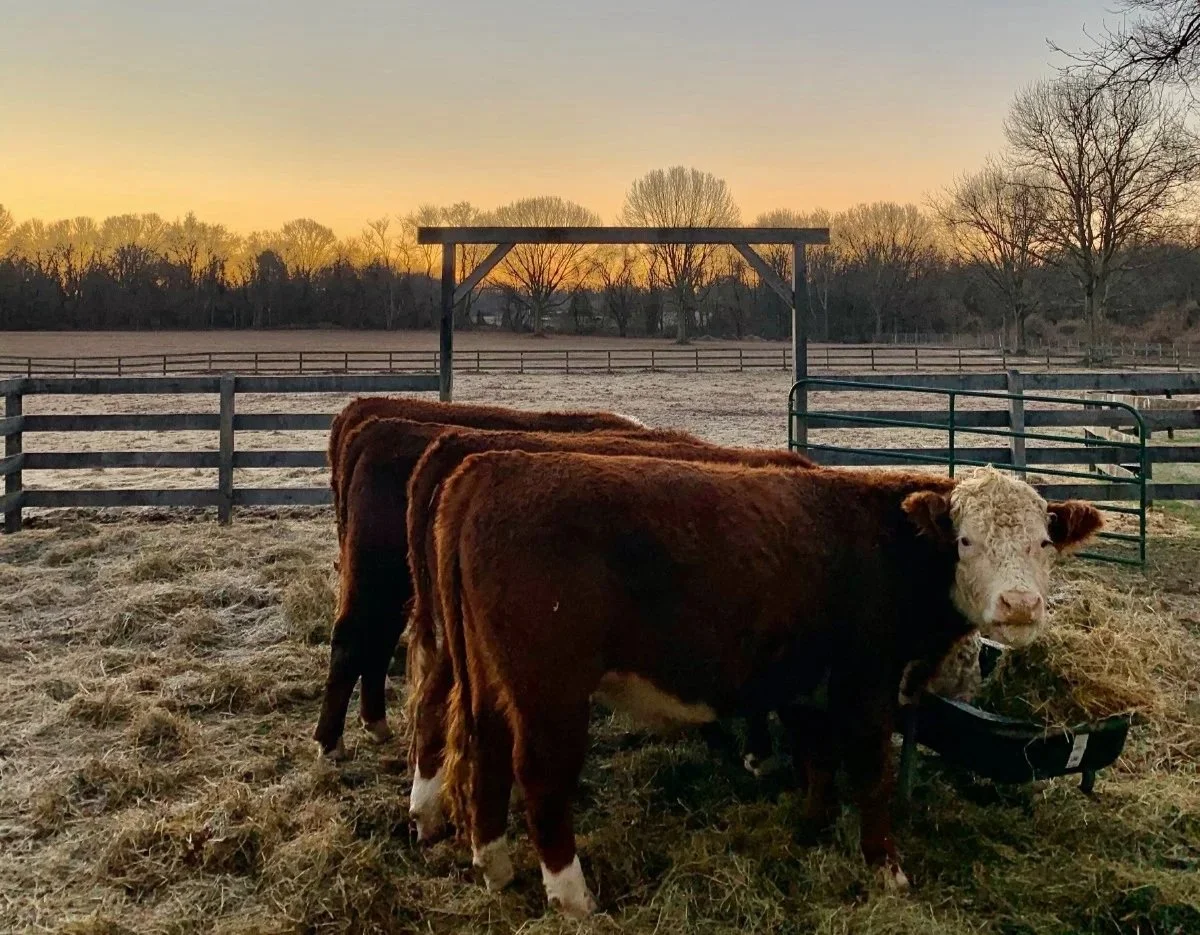
Stewardship is not seasonal. It is a year-round commitment that ensures the long-term vitality of both the land and the local food system, and caring for the land is a critical winter task. Many farmers plant cover crops including rye and clover to protect against erosion, improve soil health, and replenish nutrients, while others apply manure to enrich fields for spring planting. Farmland requires constant attention, even during its dormant months. Livestock care can also intensify in winter. Farmers work daily to ensure animals have adequate shelter, unfrozen access to water, and enough nutritious feed, often increasing the caloric intake to help cattle, sheep, and horses withstand colder temperatures. 

Photo by Jena Cosimo.

Photo courtesy of Triple L Farms’ Mosley Family. 

At Triple L Farms in Colts Neck, the Mosley family feels this shift in rhythm as winter settles in. “In the winter months responsibilities begin to lessen a bit,” Luke Mosley says. “The garden gets buttoned up for the winter, the beehives become dormant, and the pastures become sparse. We turn to supplementing our livestock with hay and feed to make sure they are happy until spring.” 

 The Mosley family’s days still start early and end late, filled with tending to chicken coops to keep water from freezing, processing cattle, and selling their beef at their on-site retail facility. Winter also opens the door for work that is harder to tackle during the growing season, like repairing equipment, maintaining their shop, and planning their business approach for the year ahead. This colder, quieter window gives the Mosleys something rare in farming: a moment to pause.  

“The winter gives us a minute to reflect on the year we had, both with our livestock and our venue, and to spend time together as a family.” One of their favorite parts of the season is returning to the antique trucks and tractors they’ve restored over the years, projects that fuel their creativity and connection to the land. “Farming in any season is tough but always rewarding. We are happy to be a part of the agricultural community here in Monmouth County.”  

“A farmer’s work is never truly done, but their enduring relationship with the land reflects their passion for that work,” Jena Cosimo, MCF’s Director of Acquisitions, reflects. “Farms protected by conservation easements and supported by Monmouth Conservation Foundation receive ongoing assistance to ensure the land is cared for in every season. It’s work we are incredibly proud to do together.” 

Photo by Jena Cosimo.

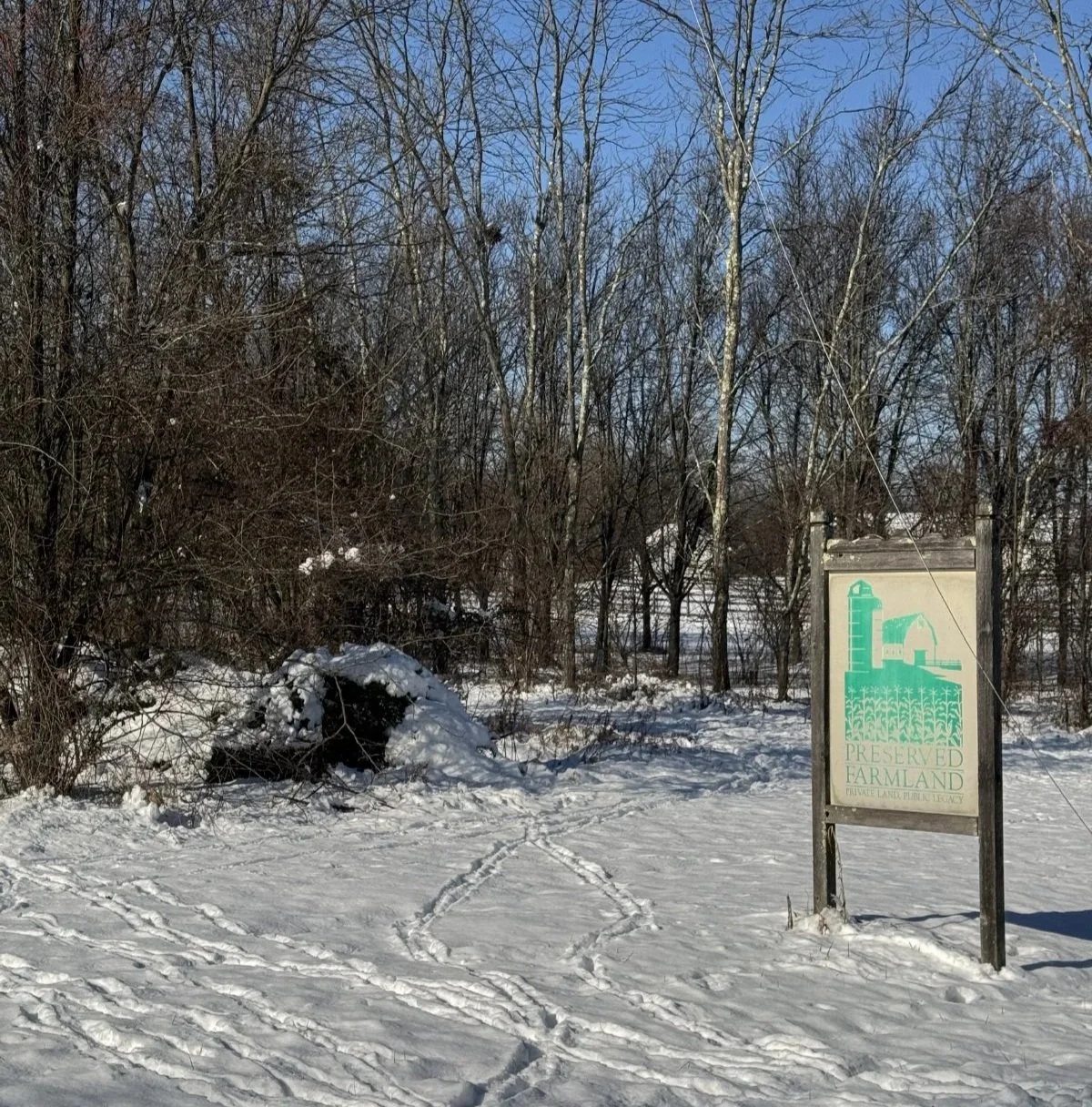
Farmland helps define Monmouth County’s identity, and MCF is honored to partner with the dedicated farmers and landowners who keep our agricultural heritage alive. We wish all members of our community, from farmers and landowners to everyone who benefits from their work, a happy, peaceful, and restorative winter season. 

If you are curious about preserving farmland or wish to explore the process of saving open space, visit our website. We can’t do this work without help; your support makes the difference for Monmouth County farms, parks, waterways, and green spaces. 

MCF 2025 Year In Review

JANUARY

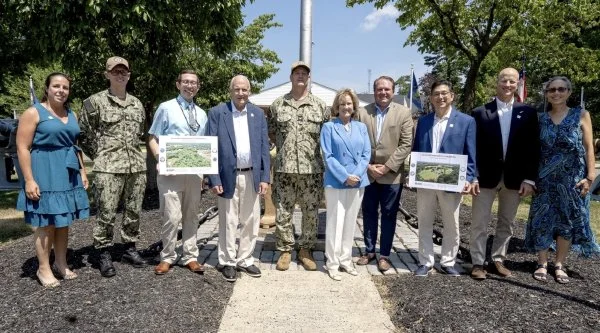
Representatives from the US Navy, Monmouth County, and MCF commemorating our inaugural preservation projects.

The U.S. Navy announced $3 million more in funding was awarded for Naval Weapons Station (NWS) Earle through the U.S. Department of Defense REPI program. Since 2018, partners at NWS Earle, Monmouth County, MCF, and local municipalities have mobilized REPI program funds to preserve farmland and wetlands, prevent incompatible development, and support military readiness around NWS Earle’s nearly 12,000-acre footprint. The partnership has already preserved 339 acres across three properties in Howell and Colts Neck, with additional properties advancing in the preservation pipeline. 

FEBRUARY

Photo courtesy of Monmouth University.

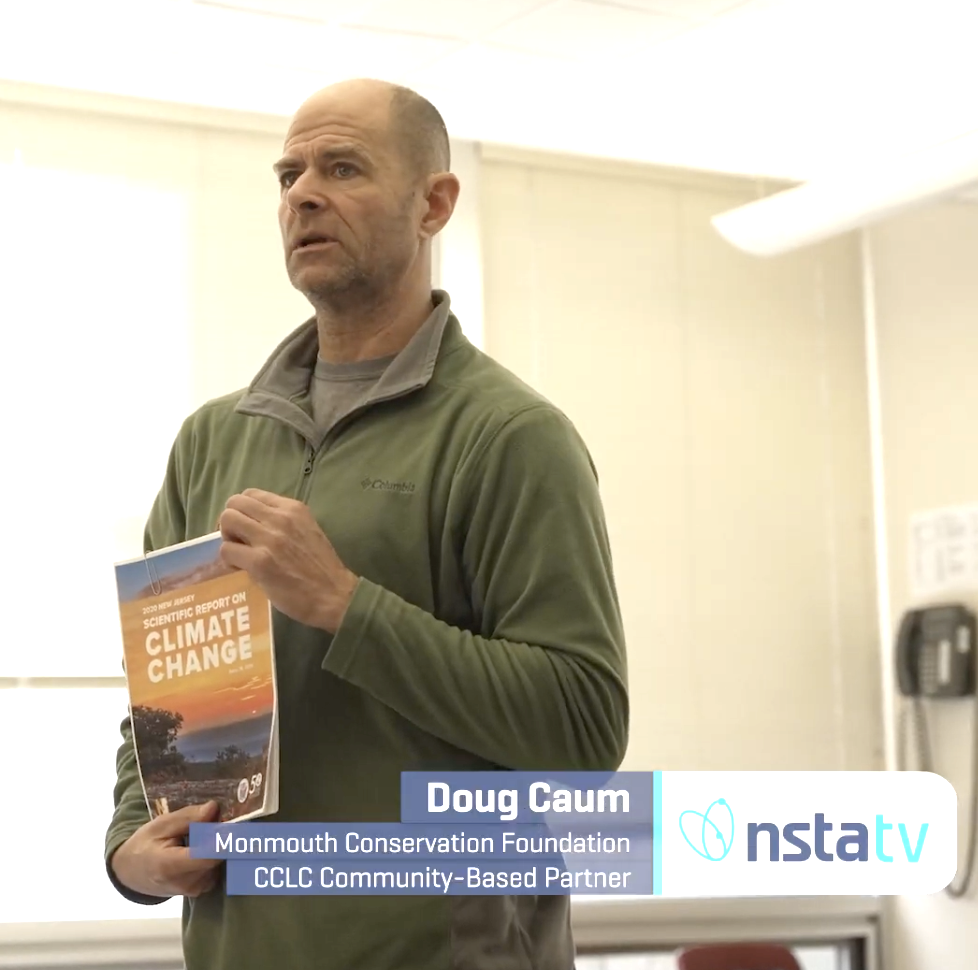
MCF was proud to continue participating as a nonprofit partner in the Climate Change Learning Collaboratives (CCLCs), through a grant renewed in 2025 by the New Jersey Department of Education to Monmouth University. The statewide CCLC program trains K–12 educators in teaching climate change across grade levels and subject areas. As part of this effort, MCF’s Director of Educational Outreach, Doug Caum, hosted a new series of free, experiential field-based trainings for educators and students on implementing and understanding the still-new statewide climate change curriculum. 

MARCH

Photo by Karen Keene.

Before the approach of warmer weather, MCF plans its annual monitoring season. MCF’s Director of Acquisitions, Jena Cosimo, conducts monitoring for all easements held by MCF and for select easements held by Monmouth County through annual site visits, detailed reporting, and ongoing landowner communication. In 2025, we oversaw the stewardship of 46 conservation and agricultural easements protecting approximately 900 acres of open space and farmland throughout Monmouth County. With only so much land remaining that is not yet developed or preserved, fostering protected lands is increasingly important.  


APRIL

L-R: NJR’s Ray Bukowski and Katie Feery with MCF’s Matthew Cohen and Marty McHugh at a site visit at Scudder Preserve. Photo by Bill Kastning.

As MCF celebrated its first anniversary as owner and steward of Scudder Preserve, we finalized a long-term management plan to guide restoration and improve habitat health across the 90-acre property. The important plan and its implementation are generously supported by a New Jersey Resources (NJR) grant and seed funding from an anonymous donor. MCF was also awarded an American Water Charitable Foundation grant to protect water quality in Scudder Preserve’s pond and stream system, in line with the management plan.

MAY

Photo by Marcella Shook Photography.

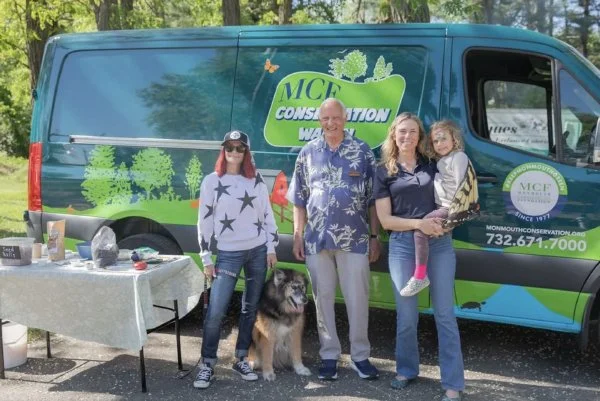
MCF was grateful to welcome friends and community members to the 2025 Spring for Conservation Family Day fundraiser, at which we launched MCF’s Conservation Wagon. Generously donated by Ray Catena Auto Group, the Conservation Wagon is designed to serve as a mobile hub for environmental learning and hands-on exploration. Reflecting MCF’s belief that nature belongs to everyone, many families linked to nonprofit partners enjoy free admission to our Family Day each year, and Conservation Wagon programs are free and prioritized in underserved communities – all thanks to generous sponsor support. 

JUNE

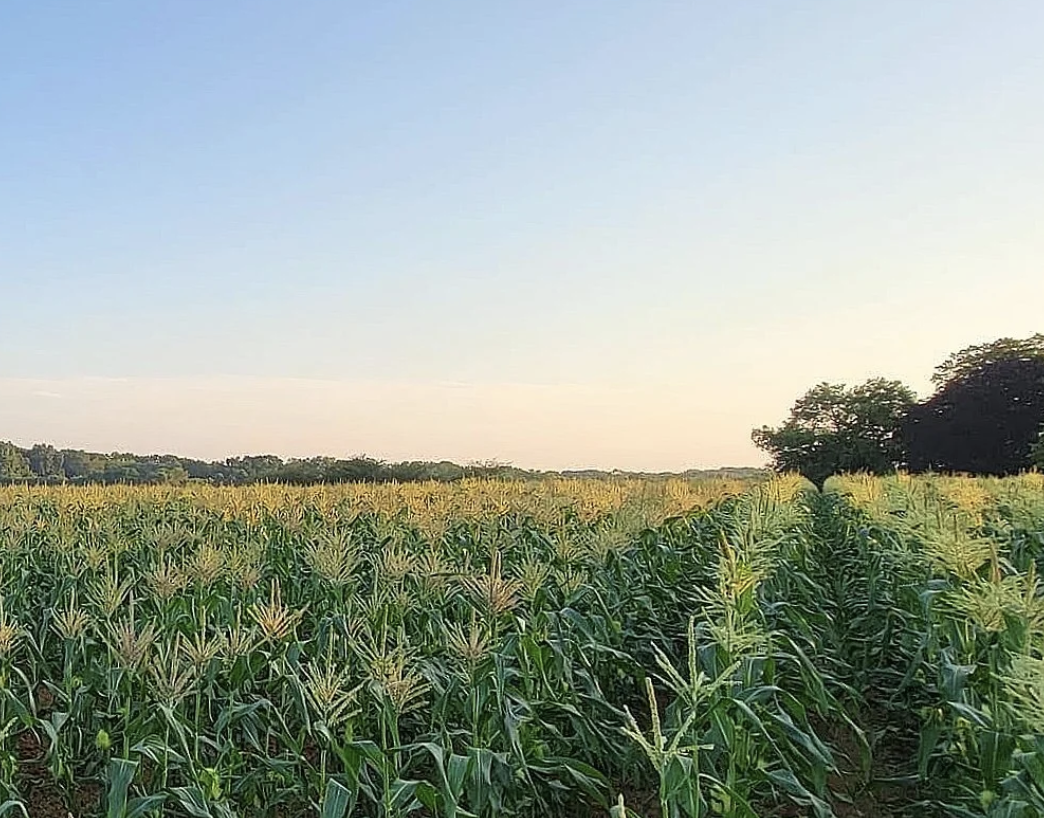
Samaha Farm, one of the properties MCF is dedicated to preserving. Photo courtesy of the Samaha family.

MCF’s fiscal year closed with 13 properties in the preservation pipeline, reinforcing our role as a trusted facilitator among landowners and public partners. As a land trust, MCF works with partners to navigate the many steps of land preservation. Every property is unique, and the process advances on a case-by-case basis, often shaped by years of negotiation and changing circumstances. MCF can act swiftly and impartially, supporting or leading projects while sustaining long-standing relationships essential to successful land preservation, driven by support from our donors.


JULY

Photo by DuBois and Associates.

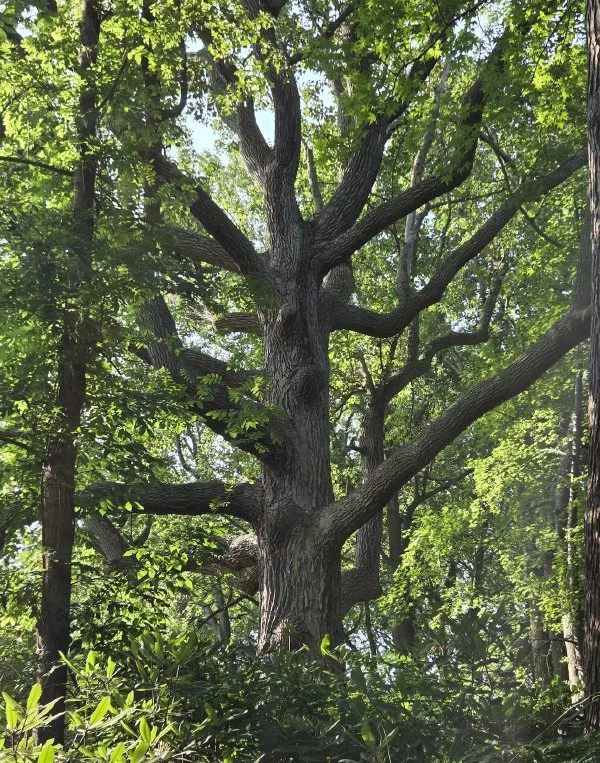
As part of a year-long Natural Resource Inventory, measurements revealed that Scudder Preserve is home to New Jersey’s second-largest tulip tree. Estimated to be more than 200 years old and in excellent health, the tree was officially measured by the New Jersey Forest Service in July. With a 17-foot, 5-inch circumference, 124-foot height, and 112-foot crown spread, it earned a Signature Tree designation, highlighting the exceptional natural resources protected by Scudder Preserve. 

AUGUST

Photo by Fred Yahn, Eagle Drone Solutions.

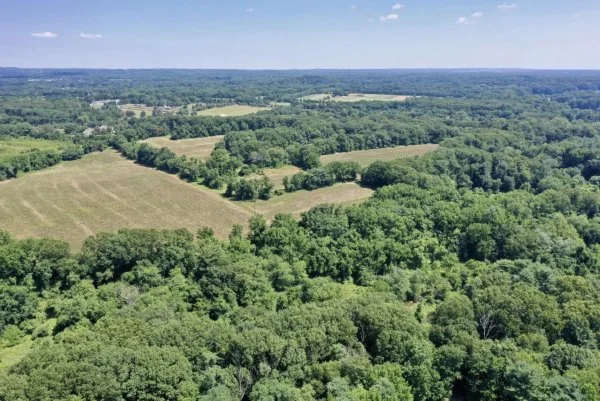
In partnership with the U.S. Navy, Monmouth County, and Colts Neck Township, MCF completed the preservation of the 84-acre Spinella Family Farm. A conservation easement permanently protects the privately owned property from development while keeping it agriculturally productive. The project also supports sustainability goals for NWS Earle and safeguards water quality, wildlife habitat, and the Yellow Brook watershed, which feeds the Swimming River Reservoir, an important regional drinking water source. 

SEPTEMBER

.

MCF received national accreditation renewal for an additional five years from the Land Trust Accreditation Commission, following a rigorous review process. First accredited in 2014, MCF has continued to meet the highest national standards for conservation permanence, governance, and stewardship, remaining among fewer than 500 accredited land trusts of the nearly 1,300 nationwide. The process included a detailed evaluation of policies and practices and a public comment period, reaffirming MCF’s commitment to transparency, accountability, and long-term land protection. 


OCTOBER

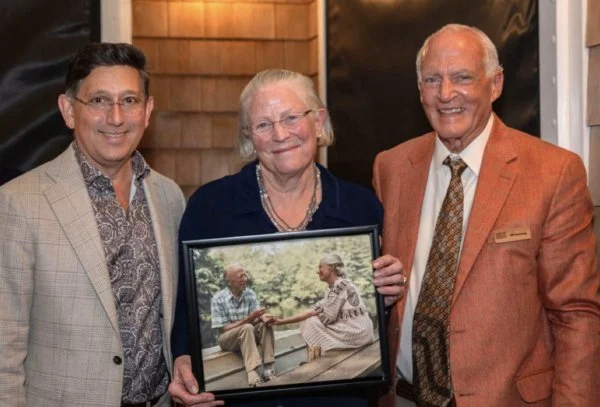
MCF’s Matthew Cohen (L) and Bill Kastning (R) with honoree Jean Scudder (C). Photo by Marcella Shook Photography.

The MCF community gathered at the Riverhouse at Rumson Country Club for our signature Fall for Conservation Cocktail Party, our biggest fundraiser of the year. On this memorable evening, MCF honored the Scudder Family and their commitment to land preservation, posthumously recognizing Richard “Dick” and Elizabeth “Libby” Scudder. The Scudder family’s legacy lives on through the 90-acre Scudder Preserve, MCF’s first landholding, where we are restoring habitat, improving water quality, and expanding public access. Fall for Conservation raises critical funds for MCF’s operations, preservation, and education efforts. 

NOVEMBER

Photo by Karen Keene.

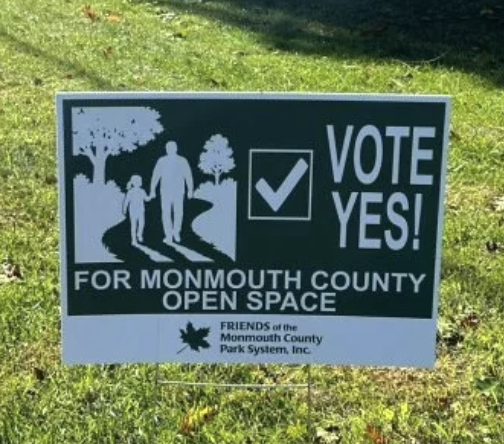
This month, Monmouth County voters strongly supported open space referendums, affirming the importance of protecting local green spaces. The Open Space Trust Fund increases passed decisively in Monmouth County, Manasquan, and Little Silver, with countywide approval rising from 58 percent in 2017 to 67 percent in 2025. MCF proudly endorsed these measures, which align with our dedication to preserving land for clean water, wildlife, agriculture, and recreation amid growing development pressures statewide. 

DECEMBER

Danny Seo. Photo by Marcella Shook Photography.

MCF celebrated our annual Holiday Style Luncheon and Shopping Spree, another key fundraiser and cherished December tradition, bringing supporters together for an eco-friendly shopping experience featuring local vendors. Guests heard from keynote speaker Danny Seo, a nationally recognized leader in sustainable living, who shared practical ways to make small, meaningful changes for environmental impact. His message highlighted how everyday choices can benefit the planet, personal health, finances, and community well-being. This memorable event raised critical revenue to drive MCF’s ongoing efforts.


Monmouth Conservation Foundation Announces Leadership Change

For Immediate Release
Contact: Karen Keene
Kkeene@monmouthconservation.org
M. 908-839-0324

Middletown, NJ. (January 27, 2026) – Monmouth Conservation Foundation (MCF) announces that after 14 years, William D. Kastning, Executive Director, is transitioning out as part of a long-planned move out of state and to pursue other opportunities nearer to his new geography. This announcement comes as part of a succession planning process that the MCF Board of Trustees established in early 2025 to work closely with leadership and staff on the transition, and to facilitate the search for Kastning’s successor.

Photo by Tine Colella Photography.

“The Board of Trustees is thankful for Bill’s leadership during a meaningful period for the organization,” said Matthew Cohen (Board President). “We appreciate his service and look ahead with confidence as the organization enters its next phase.”

During his tenure at MCF, Kastning hired and mentored an outstanding staff and guided the organization through major milestones. Under Kastning’s leadership, MCF worked alongside federal, state, county, local community, and landowner partners to support the creation and revitalization of multiple community parks and preserve open space, farmland, and critical wildlife habitats. The organization engaged in local advocacy efforts for the statewide Keep it Green Campaign, expanding recreational access and funding for open space, farmland, and historic preservation throughout the state. Additionally, funds were raised for the acquisition, restoration, and stewardship of the historic 90-acre Scudder Preserve, the organization’s first permanent land holding featuring conservation education and community outreach as a strategic anchor to be incorporated into MCF’s next chapter.

“It has been a privilege to lead the organization during a period of growth and evolution,” Kastning said. “I’m proud of the progress we’ve made in advancing MCF’s mission and strengthening the organization for the future, and I’m confident in the foundation in place for the next chapter of leadership.”

During the transition period, MCF will be ably led by senior staff members Jena Cosimo (Director of Acquisitions) and Karen Keene (Director of Development and Communications) as Acting Co-Directors.

The MCF Board of Trustees has retained DSG | Koya, an executive recruiting firm that specializes in mission-driven search, to conduct the search for MCF’s next leader, which will formally launch in February, 2026. The search firm can be reached at monmouth@koyapartners.com.


###

2/4/26: View the Executive Director Position Profile HERE.


About Monmouth Conservation Foundation

Founded in 1977, Monmouth Conservation Foundation (MCF) works to acquire and preserve open space and farmland and conserve natural habitats throughout Monmouth County in support of outdoor recreation, agriculture, clean water, and wildlife for long-term sustainability. An independent nonprofit organization that works with Monmouth County and its 53 municipalities, MCF’s vision is to lead conservation and education efforts to preserve and protect our natural environment, so all individuals and communities have access to and can benefit from open space and nature for generations to come. MCF received accreditation by the Land Trust Accreditation Commission in 2014 and has continued to maintain this status since. Accreditation is awarded to land trusts meeting the highest national standards for excellence and conservation permanence. MCF is one of 478 accredited land trusts out of 1,281 nationwide. For more information, visit www.monmouthconservation.org.